Traders often focus on a single stock chart, index or options chain when evaluating a potential trade. But financial markets are connected in ways that a single chart cannot always reveal. Interest rates influence valuations, currencies affect commodities, and volatility can change how investors approach risk. Intermarket analysis helps traders understand these relationships and assess the broader conditions behind price movements. It does not predict markets with certainty, but it can provide valuable context for better-informed trading decisions.
What Is Intermarket Analysis, and Why Does It Matter?
Intermarket analysis studies the relationships between different financial markets, including equities, bonds, currencies, commodities and volatility. The underlying idea is that movement in one market can influence, or reflect, activity in another.
For example, rising bond yields may put pressure on growth stocks, a stronger US dollar can affect commodity prices, and higher crude oil prices may influence inflation expectations. These relationships are not fixed rules, but they can help traders understand what is driving market behaviour.
This broader perspective is useful even for traders following Automated swing trading signals. Automated systems may identify potential setups, but understanding the surrounding market environment helps traders assess whether a signal aligns with wider market conditions.
How Bonds, Currencies and Commodities Influence Equities
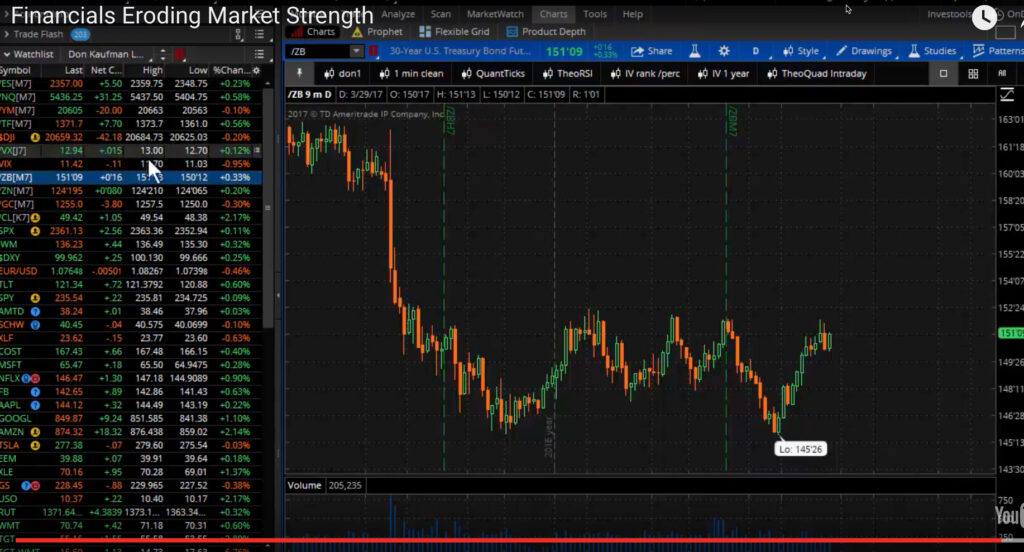
The bond market is an important part of intermarket analysis. Changes in government bond yields can influence borrowing costs, equity valuations and investor appetite for risk. When yields rise sharply, growth stocks can come under pressure because their expected future earnings are discounted at higher rates. Falling yields, meanwhile, may reflect expectations of lower interest rates or concerns about economic growth.
Currencies also influence global markets. A stronger US dollar can affect dollar-denominated commodities, multinational companies and emerging-market economies. For Canadian traders, these relationships are particularly relevant because currency movements and commodity prices can influence the performance of major TSX sectors.
Commodities provide another layer of information. Crude oil can reflect energy supply and demand as well as inflation pressures. Industrial metals may offer insight into manufacturing activity, while gold can attract defensive demand during periods of uncertainty. Traders monitoring NASDAQ trading alerts or TSX trading alerts can use these relationships to understand the wider forces affecting technology, energy, materials and other market sectors.
Volatility and Correlations: Understanding Changing Market Conditions
Volatility is another important component of intermarket analysis. The VIX, which measures expected volatility in the S&P 500 based on options prices, is commonly used to assess changes in market uncertainty. A rising VIX can indicate increasing demand for protection and a shift towards more defensive positioning.
These conditions can affect equities, options premiums and portfolio risk at the same time. During periods of market stress, correlations between assets may also increase, meaning investments that previously moved differently can begin declining together.
It is equally important to remember that correlations change. Stocks and bonds may move in opposite directions in one economic environment and fall together in another. Monetary policy, inflation, geopolitical developments and liquidity conditions can all influence these relationships. Intermarket analysis should therefore be used as a framework for interpreting conditions, not as a fixed prediction model.
How OptionTiger Fits Into Broader Market Analysis
Understanding market relationships can complement technical analysis and options education. OptionTiger provides educational resources, proprietary trading indicators and structured options courses to help traders study market behaviour, strategy selection and risk management.
An Options market analysis course or an Online Options Trading Program can help traders build a stronger understanding of how volatility, price action and broader market conditions influence options strategies. Traders exploring Trading Indicators for Canadian Traders can also benefit from viewing indicator signals alongside the wider economic environment. No indicator or alert should be treated as a substitute for independent analysis and risk assessment.
FAQ
What is the main purpose of intermarket analysis?
It helps traders understand how different markets influence one another. By monitoring bonds, currencies, commodities and volatility, traders can assess the broader conditions affecting equities and options.
Does intermarket analysis predict stock market movements?
No. It provides context rather than certainty. Relationships between markets can change, so traders should combine intermarket observations with technical analysis, market data and risk management.
Why should options traders monitor volatility?
Implied volatility affects options premiums and can influence the outcome of a position. Monitoring volatility alongside price movements can help traders better evaluate strategy selection and potential risk.
Final Thoughts
Markets rarely move independently. Interest rates, currencies, commodities and volatility all contribute to the environment in which stocks and options trade. Intermarket analysis helps traders look beyond an individual chart and understand the forces influencing price action. The goal is not to predict every move, but to make decisions with a clearer view of the market.
Explore OptionTiger’s educational resources to strengthen your understanding of market analysis, options strategies and risk management.