Trade simulators are becoming an increasingly useful part of financial market learning, especially for traders who want to understand strategies before putting real money at risk. They allow you to test entries, study risk, compare outcomes, and see how a strategy behaves across different market conditions.
But there is a catch.
A simulator can teach you how a strategy behaves. It cannot guarantee that you will execute that strategy successfully when real money is involved.
Understanding that difference is essential for anyone moving from trading education to live markets.
What Trade Simulators Actually Teach You
A good simulator turns abstract trading concepts into something you can actually observe.
Instead of simply reading about Delta, Theta or implied volatility, traders can see how these variables affect a position as the market changes. This is particularly useful for options strategies, where risk can change significantly as price, volatility and expiration move.
For example, an Iron Condor may look straightforward on paper. Simulation can show how the position reacts when the underlying approaches a short strike, volatility suddenly increases, or expiration gets closer.
This makes simulation a valuable part of Financial Market Learning because traders can move beyond memorising strategy rules and start understanding the behaviour behind them.
Simulation vs. Real Market Conditions
The biggest limitation is simple: simulated markets are controlled environments. Real markets aren’t.
A simulator may assume a particular entry or exit price. Live trading introduces bid-ask spreads, slippage, liquidity changes, partial fills and sudden volatility.
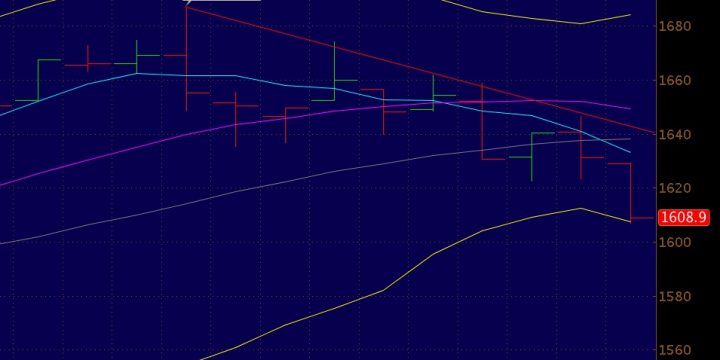
This becomes particularly important when traders use technical tools or Custom Trading Indicators to identify market conditions. An indicator can help traders analyse price behaviour or identify potential setups, but it cannot account for every variable affecting a live trade.
The same applies to backtesting. Historical data can reveal how a strategy performed under previous conditions, but it cannot guarantee that today’s market will behave in exactly the same way.
Simulation and backtesting should therefore answer:
“How might this strategy behave?”
Not:
“What will definitely happen?”
The Psychology Behind Live Trading
There is one variable no simulator can perfectly reproduce: your emotional response to real money.
A simulated loss is information. A real loss can trigger fear, hesitation or impulsive decision-making.
A trader might follow their rules perfectly for months in a simulator, then abandon those same rules after experiencing several consecutive losses in a live account.
This is also relevant when using a swing trading alert service. Receiving an alert does not automatically produce disciplined execution. Traders still need to evaluate the setup, understand the risk, follow their position-sizing rules and manage the trade according to their plan.
The gap between knowing what to do and actually doing it under pressure is where many traders struggle.
How to Use Simulators Without Creating False Confidence
The best way to use a simulator is to stress-test your strategy, rather than simply search for profitable outcomes.
Try different market conditions. Include potential slippage and transaction costs. Test losing streaks. Examine maximum drawdown. See what happens when volatility rises unexpectedly.
Instead of asking:
“How much money could this strategy make?”
Ask:
“What could make this strategy fail?”
That question produces much more useful information.
For traders taking an Options trading masterclass, simulation can then become a practical extension of what they learn—allowing them to test concepts such as Greeks, payoff structures, volatility and risk management rather than learning them only theoretically.
FAQs
Are trade simulators useful for beginners?
Yes. They can help beginners understand trading mechanics, strategy structures, risk and potential outcomes without immediately risking capital.
Can simulation guarantee profitable live trading?
No. Simulation cannot fully reproduce execution costs, liquidity conditions, market surprises or emotional decision-making.
Should traders use simulation before live trading?
It can be useful as part of preparation, but there is no universal number of simulated trades or days that guarantees readiness. Understanding the strategy and having a defined risk process matter more.
Final Thoughts
Trade simulators are neither a shortcut to trading success nor a useless exercise. Used correctly, they are a practical bridge between financial market learning and real-market experience.
They help traders understand strategy behaviour, identify weaknesses and practise decision-making.
The key is simple: use the simulator to test your assumptions—not to convince yourself that the market owes you the same result.